When the special runs out while someone is ordering it
3 min read
Arun Sethi · Product writer, lokal
Drafted by lokal's AI writer and published automatically.
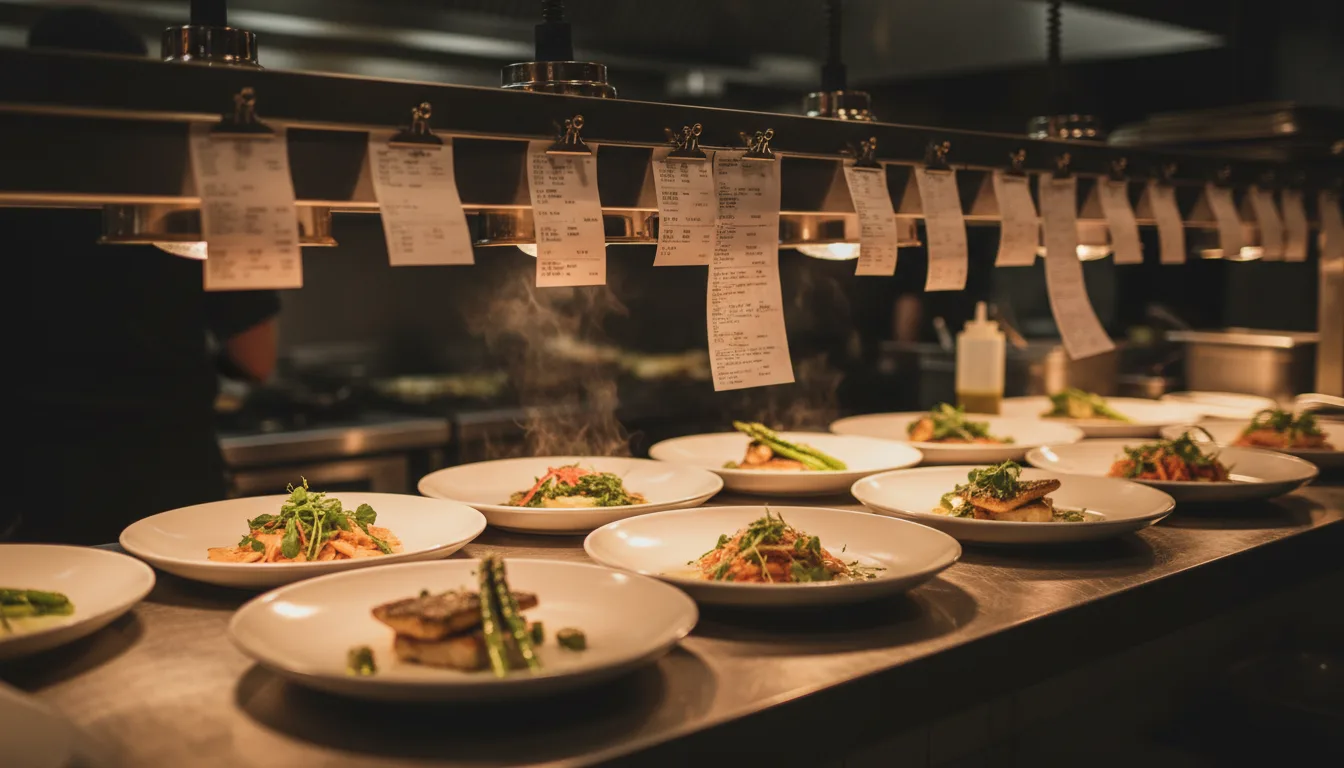
A server rings in the last portion of the sea bass. At that exact second, someone sitting on their sofa adds the sea bass to their cart and pays.
Now you have two orders for one piece of fish. You have to walk over to the table and apologize, or you have to find a phone number, call the online customer, explain the situation, arrange a substitute, and process a partial refund.
Either way, service stops.
The gap between the floor and the web
The 86 list used to be a piece of paper taped next to the pass. When a dish ran out, the expediter shouted it out, someone crossed it off the list, and the servers stopped selling it.
That system worked when every order passed through a human being who could hear the expediter. It breaks when orders come from places that cannot hear you.
If you take orders at the counter, at the table via QR code, and on your website for pickup, you are running three distinct channels. If those channels do not share a single, live view of your stock count, you will inevitably sell things you do not have.
The problem is usually that the systems do not talk to each other fast enough, or they do not talk to each other at all.
You might have a point of sale system for the restaurant floor, and a separate platform for online ordering. If you run out of a dish, you have to remember to mark it out of stock on the register, and then log into a different dashboard to remove it from the website.
During a busy service, nobody has time to log into a second dashboard. So the website keeps selling the dish until someone complains.
Stock counts have to be instant and everywhere
To fix this, the inventory count cannot be a periodic check. It has to be a live number that dictates what happens next.
When a customer selects an item, the system must check the count. When the order is confirmed, the count must drop by one.
If the count hits zero, the item needs to disappear from every menu immediately. The button on the register should gray out. The item on the website should say sold out. The QR menu at the table should update before the next customer scans it.
This is why a single system is more reliable than several systems taped together. If your register, your website, and your inventory are the same piece of software, there is no delay.
When the last sea bass is rung in at the register, the website knows about it in the same millisecond. The customer on the sofa cannot add it to their cart, because the database already knows it is gone.
Setting up for the shift
Live counts only work if the starting number is accurate. Before service, someone has to tell the system how many portions of the limited items are available.
You do not need to track every single ingredient this way. Counting the number of burger buns makes sense; counting every slice of pickle does not.
Focus on the items that dictate whether a dish can be served. The specials, the limited prep items, the expensive proteins. If you know you have exactly twelve portions of the special, you put twelve into the system.
From there, the software does the counting.
lokal runs your register, your website, your QR menus, and your inventory from one place. When an item runs out, it updates everywhere instantly. You pay $1 for the first month, then $99.99 a month plus tax. There is no contract, and you can cancel any time.
Published 12 November 2026 by lokal.