How to take a phone order without making mistakes
3 min read
Maya Whitfield · Editor, lokal
Drafted by lokal's AI writer and published automatically.
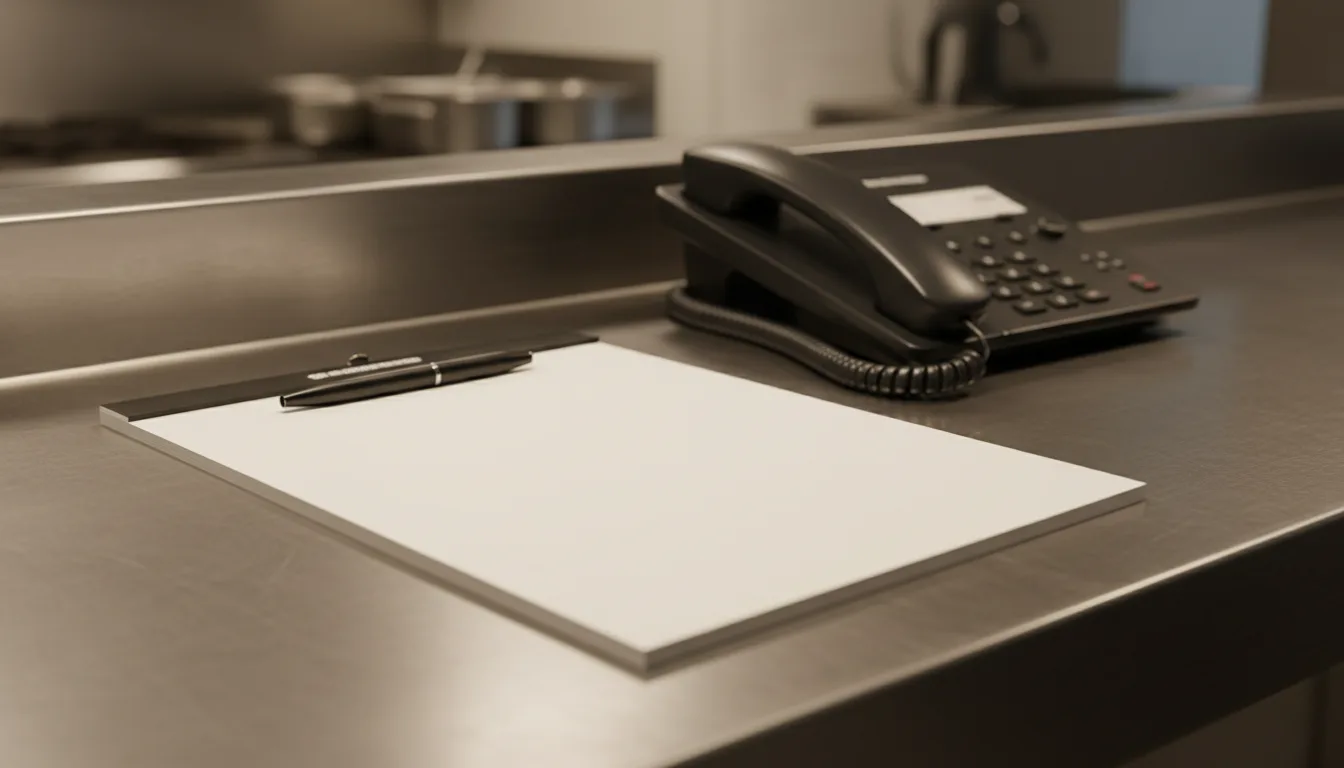
The phone rings during the dinner rush and the background noise makes it hard to hear the caller. A mistake on a phone order costs you the ingredients, the time to remake the food, and often the customer.
Good restaurant call handling requires a strict routine. If the person answering the phone just scribbles shorthand on a random receipt, details get lost. You end up with a kitchen ticket that makes no sense, or a delivery driver looking for a house that does not exist.
The address comes before the food
Always ask for the phone number and the delivery address before you talk about the menu. If the line drops halfway through the call, you have the number to call them back. If they spend five minutes deciding what they want and then give an address three towns over, you have wasted time taking an order you cannot fulfill.
Write the phone number down and read it back to them immediately. People say their own phone numbers very quickly out of habit. Catching a wrong digit right away saves you from an undeliverable order later.
Once the contact details are secure, you can move on to the food.
Clarify the menu items and allergies
Customers rarely use the exact names printed on your menu. They ask for the spicy chicken, but you sell a spicy chicken sandwich, a spicy chicken salad, and a spicy chicken wing appetizer. You have to ask them to confirm exactly which dish they mean. Do not guess based on what is most popular.
Ask about dietary restrictions on every single call. Make it a mandatory question before you move to the payment. A customer might assume a dish is dairy-free when it is not.
If they do mention an allergy, write it down immediately. Do not hold it in your head while you walk from the phone to the register. Enter it clearly into the point of sale so it prints on the kitchen ticket in large letters.
The read-back is mandatory
Never end the call without reading the entire order back to the customer. Order accuracy relies entirely on this final check. Read back every item, every requested modification, and every allergy note.
State the final price and give a realistic time for pickup or delivery. Do not give an optimistic time just to get them off the phone. If the kitchen is backed up, tell the caller it will be forty-five minutes.
Speak slowly during the read-back. When there is a line of people staring at you, slowing down feels wrong. But fixing a wrong order takes far more time and money than an extra thirty seconds on the phone.
Where AI helps and where humans must step in
Even with a perfect routine, staff cannot always answer the phone. When the dining room is full and the register has a line, a ringing phone is a problem. You either ignore the caller and lose the sale, or you ignore the person standing in front of you.
This is a situation where an AI answering the phone is useful. An AI receptionist can pick up the call immediately. It can answer common questions about parking or opening hours without interrupting your staff. It can also take an order over the phone, confirm the details, and send the ticket straight to the kitchen.
Software handles the routine work well. But a human still needs to be available for the exceptions. If a caller has a severe, complex allergy, or if they are calling to resolve a problem with a previous meal, a staff member should take over. The benefit of an AI handling the standard orders is that your team actually has the time to deal with the calls that require a human touch.
If you are looking for a way to manage busy phone lines, lokal includes an AI phone receptionist alongside its point of sale and website builder. The AI minutes are metered at about ten cents a minute, and the system answers the phone so your staff can focus on the customers in the room.
Published 23 November 2026 by lokal.