How to pack takeaway orders so the kitchen never guesses
3 min read
Arun Sethi · Product writer, lokal
Drafted by lokal's AI writer and published automatically.
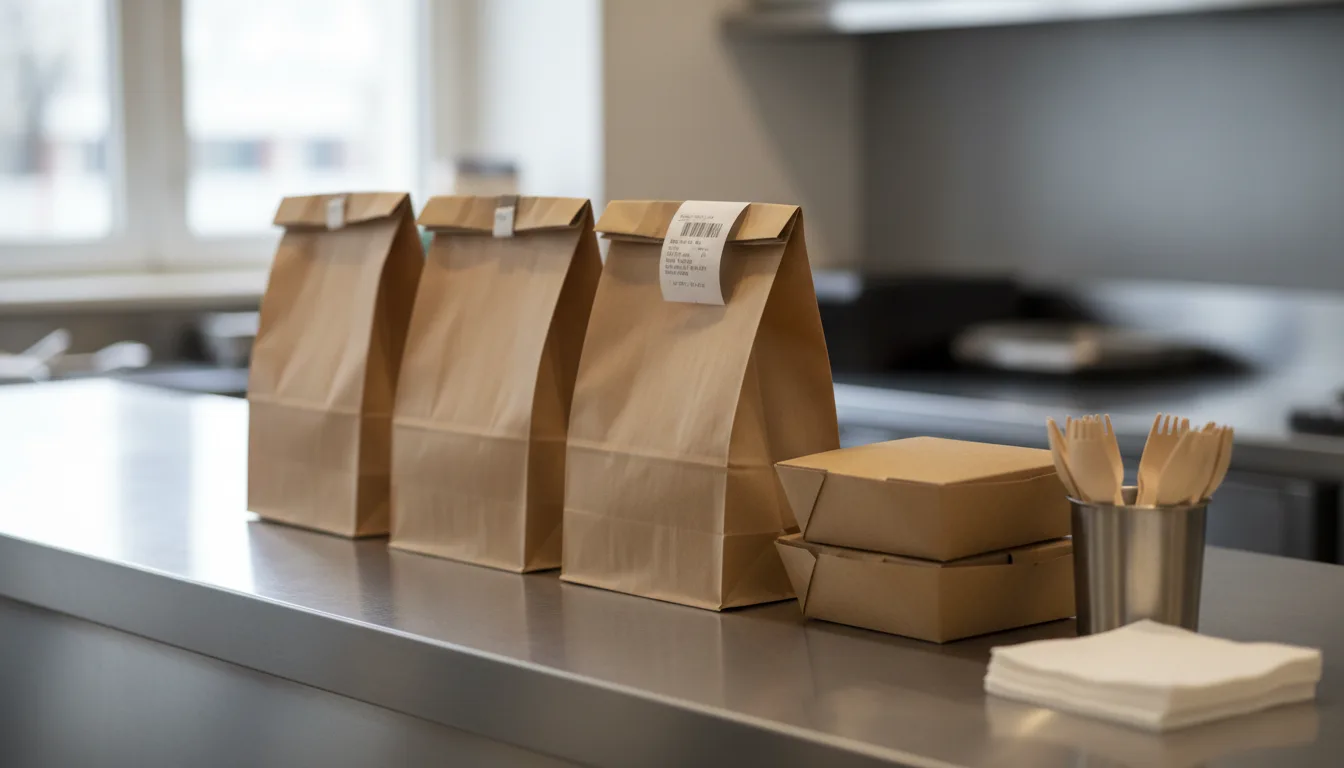
You have three paper bags on the counter and four tickets on the rail. The kitchen just pushed out two burgers, a salad, and three sides, but nobody knows which item belongs to which customer. This is the reality of restaurant to go orders. Getting the food cooked is only half the job. The other half is getting it into the right bag and out the door without missing a sauce or swapping a main. A missing side ruins the meal for the customer at home. A swapped bag means two angry phone calls. Software takes the order, but your physical setup dictates whether it leaves the building correctly.
The bagging station
You need a dedicated physical space for packing. A takeaway workflow falls apart if staff are boxing food on the same pass where servers pick up dine-in plates. Clear a section of the counter. Stock it with bags, boxes, napkins, and cutlery. Put the sauce cups here, not in the kitchen. When the kitchen finishes a dish, they slide it to this specific zone. Keep cold items away from the heat lamps. The person packing needs space to open a paper bag fully without knocking over a stack of plastic lids.
Assign one person to this station during busy shifts. If everyone tries to pack bags, items get missed. One person boxes the food, checks the ticket, and staples the bag shut. They are the only person who touches the packing process. When multiple people drop boxes into the same bag, nobody knows if the fries are actually in there.
Reading the kitchen ticket system
The way tickets print dictates how bags get packed. A kitchen ticket system needs to separate the items clearly. The packer reads the ticket from top to bottom. They cross off items with a pen as they go into the bag. Train the packer to read modifiers carefully. A request for no onions is easy to miss if the packer is rushing. The person at the bagging station is the last line of defense before the food leaves the building. They must verify what is inside the box.
Put the ticket on the outside of the bag. Do not drop it inside. The person managing the counter needs to read the name and order number without opening a sealed bag. If an order requires two bags, write one of two on the first bag and two of two on the second. Staple a copy of the ticket to both bags. This prevents a driver from walking away with half a meal.
Controlling the order handoff
The final step is the order handoff. This is where drivers and customers crowd the register. Keep the packed bags behind the counter. Do not leave them on a table for people to sift through. When a bag sits in the open, customers touch it, check the receipt, and sometimes take the wrong one. Walk-in customers and delivery drivers are usually in a hurry. They will stare at your staff until they get a bag. Keep the handoff area separate from the main till if you have the space.
Ask for the name or the order number. Hand the bag directly to the person. If they ordered a drink, this is the moment you grab it from the fridge. Cold drinks go in a separate carrier. Never put a cold can inside a bag with hot food. The hot food warms the drink, and the condensation from the can makes the paper bag tear.
How lokal fits in
Software handles the data so you can handle the physical reality. When a customer orders through your website or the AI phone receptionist, lokal sends that order straight to your kitchen printer or display. The ticket format is consistent whether the order comes from the web, the phone, or the register. You run the bagging station and the handoff. lokal keeps the orders flowing in.
Published 3 October 2026 by lokal.