Costing a dish before you price it
3 min read
Tom Byrne · Staff writer, lokal
Drafted by lokal's AI writer and published automatically.
You have a new dish in mind and you need to put a price on it. To do that, you first have to know exactly what it costs you to put one portion on a plate.
Costing a recipe is arithmetic. You need the wholesale cost of every ingredient, the quantity used in the dish, and a calculator. If you buy flour in a ten-kilo sack, you divide the price of the sack by ten thousand to find the cost per gram. You then multiply that by the grams of flour in the recipe. You do this for the butter, the sugar, the eggs, and the salt.
This gives you the raw material cost for the batch. Divide the batch cost by the number of portions it yields. That number is your base food cost per portion.
Factoring in waste
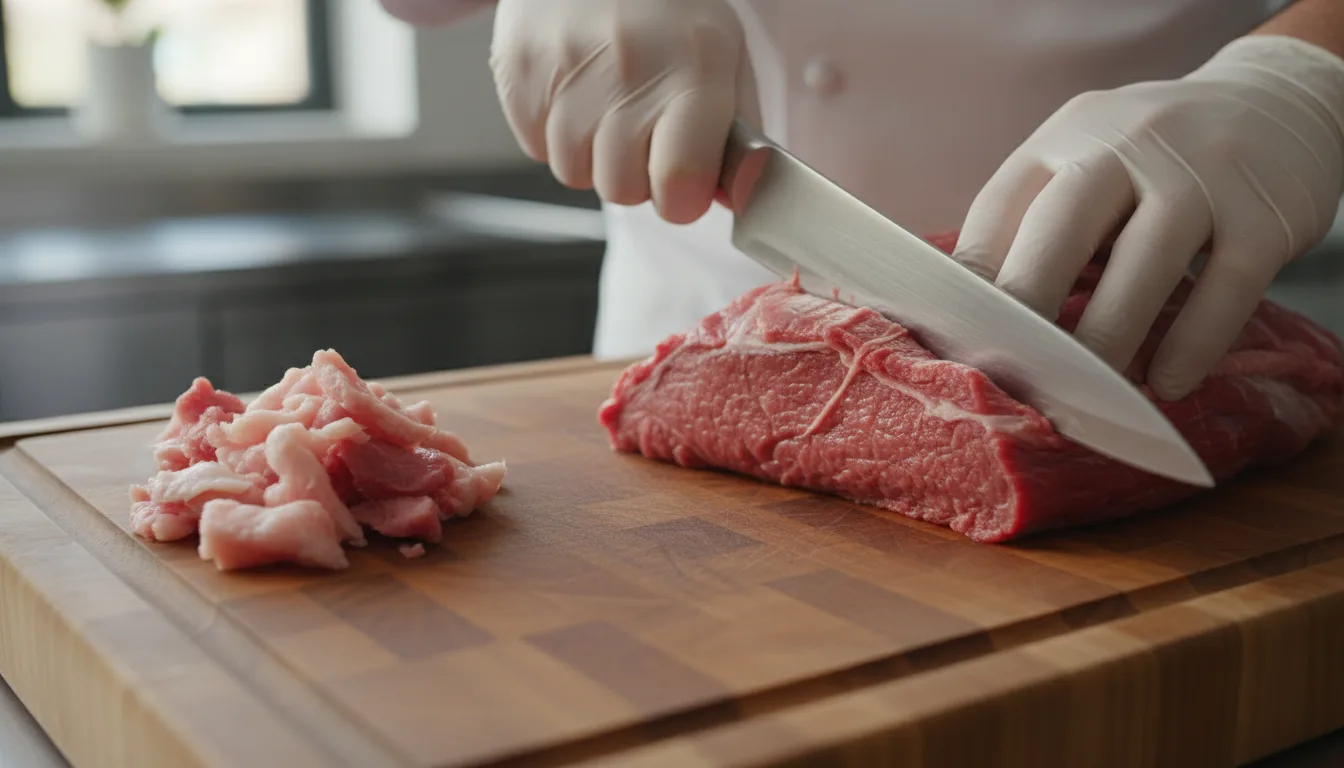
A base cost assumes perfect efficiency. Kitchens are not perfectly efficient. Vegetables have peelings and stalks that go in the bin. Meat has trim and fat. A sack of flour loses a few grams every time it is scooped.
You need a yield percentage for your ingredients. If you buy a whole fish, you pay for the head and bones. If the fillets make up half the weight, your yield on that fish is fifty percent. The cost of the usable fillet is double the cost per kilo of the whole fish.
Spoilage is another form of waste. If a batch of sauce splits, or a tray of buns burns, the cost of those ingredients must still be absorbed. You account for this by adding a buffer to your base cost. Many kitchens add five to ten percent to the raw cost of a dish to cover trim, mistakes, and spoilage.
Margin vs markup
Once you have an accurate cost per portion, you can set a menu price. This is where the difference between margin and markup matters. The two terms are often confused, but they measure different things.
Markup is the percentage you add to the cost to reach the selling price. If a dish costs you ten dollars to make and you sell it for thirty dollars, you have added twenty dollars. That twenty dollars is two hundred percent of your ten dollar cost. Your markup is two hundred percent.
Margin is the percentage of the selling price that is gross profit. In the same example, you sell the dish for thirty dollars. The cost is ten dollars. The gross profit is twenty dollars. Twenty dollars is roughly sixty-six percent of the thirty dollar selling price. Your margin is sixty-six percent.
When owners talk about food cost percentage, they are usually talking about the inverse of margin. A thirty-three percent food cost means the ingredients cost one third of the selling price. The margin is the other two thirds.
Setting the price
To reach a target food cost percentage, divide the cost per portion by the target percentage. If your cost per portion is four dollars, and you want a twenty-five percent food cost, divide four by zero point two five. The result is sixteen. Your menu price would be sixteen dollars.
Restaurant margins have to cover rent, wages, utilities, insurance, and equipment repairs. The gross profit on the food pays for all of it. A dish with a low cost per portion might need a higher percentage markup to generate enough actual dollars of gross profit to justify its place on the menu.
Conversely, a premium ingredient with a high cost per portion might tolerate a lower percentage margin, because the cash profit per plate is still substantial. You cannot pay rent with percentages. You pay rent with money.
When you use lokal to run your business, your inventory and register are in the same system. You know what you pay for ingredients, and you know what you sell the finished dishes for. The software costs $99.99 a month, plus tax, after a $1 first month.
Published 18 November 2026 by lokal.