Why you miss calls, and what it takes to answer them all
4 min read
Maya Whitfield · Editor, lokal
Drafted by lokal's AI writer and published automatically.
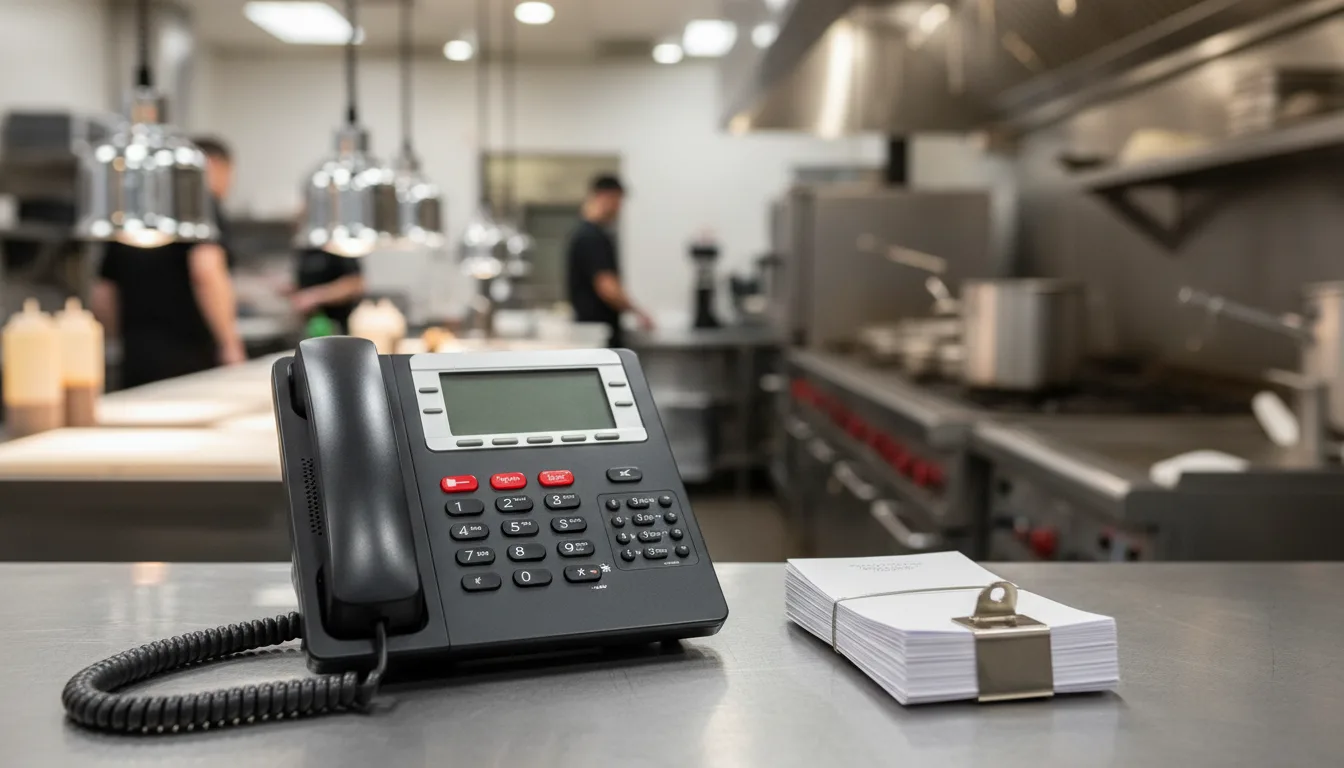
It is 7:15 on a Friday. The printer is running, a customer is handing you a card, and the phone starts ringing.
You have three choices. You can let the phone ring out and lose whatever business is on the other end. You can put the customer standing in front of you on hold, pick up the receiver, and shout over the noise to ask the caller to wait. Or you can hire a person whose only job is to stand by the phone and answer it.
None of those choices are good. Missed calls cost money. Putting a paying customer on hold is rude. And hiring a dedicated phone operator for a small restaurant is too expensive for most margins.
The operational reality of a restaurant is that the phone rings when it is least convenient. The rush hours are when you make your money, and they are also when people call to ask if you have a table, if you are open, or if they can place a takeout order. A phone call takes an average of two minutes. If you get ten calls in an hour, that is twenty minutes of staff time gone. Twenty minutes of a person not running food, not wiping tables, and not taking orders from the people who are actually in the building.
What happens when a call is missed
A missed call is an unknown. It might be a regular calling to book a table for six. It might be someone wanting to place a large catering order. It might be a delivery driver trying to find the back door. Or it might be a wrong number.
Because you do not know, every missed call feels like a mistake. You check the caller ID. You wonder if you should call them back. If you do, you often get their voicemail, because they have already called another restaurant that answered the phone.
Some restaurants try to solve this by routing calls to a manager's cell phone. This just moves the problem. The manager is usually on the floor, dealing with the same rush, and now their phone is ringing in their pocket.
Other restaurants use an answering service. Traditional answering services use call centers. The operators read from a script. They do not know your menu, they do not know if the patio is open, and they cannot tell a caller what the soup of the day is. They take a message, and you still have to call the customer back.
What an AI receptionist does
An AI receptionist for restaurants is software that answers the phone. It is not a recording that asks callers to press one for hours and two for reservations. It is a voice that speaks to the caller, listens to what they say, and responds.
When the phone rings at 7:15, the AI answers it immediately. It does not put the caller on hold. It does not get flustered by the background noise.
If the caller asks what time you close, the AI tells them. If they ask if you have vegan options, the AI checks the menu and tells them what they are. If they want to book a table, the AI checks your reservations and books it. If they want to place an order, the AI takes the order and sends it to your kitchen printer.
The AI handles the routine calls that take up time. It answers the questions that are already on your website but that people still call to ask.
What an AI receptionist cannot do
An AI receptionist is not a person. It cannot walk into the kitchen and ask the chef if they can make a dish without garlic. It cannot look out the window and tell a caller if there is a line out the door.
It cannot handle a complicated complaint from an angry customer. It cannot negotiate a price for a private event. It operates based on the information it has been given.
If a caller asks a question the AI does not know the answer to, it has to say so. It can take a message or try to transfer the call to a human, but it cannot improvise.
An AI receptionist requires setup. You have to give it your menu, your hours, your policies, and the answers to the questions people usually ask. If you change your menu and do not update the software, the AI will give callers the wrong information.
The math of answering the phone
Deciding how to handle restaurant phone calls is a calculation. You have to weigh the cost of missed calls against the cost of answering them.
If you lose one large takeout order a week because the phone rings out, you know what that costs you. If you pay a staff member to answer the phone, you know their hourly rate.
lokal includes an AI receptionist as part of its software for local businesses. It answers the phone, takes orders, and handles bookings. The software is $99.99 a month, with the first month for $1. The AI receptionist minutes are metered on top at about $0.10 per minute. You pay for the time the AI spends talking to your customers, rather than paying a person to wait for the phone to ring.
Published 10 October 2026 by lokal.